

Imagine A Place to Sit
How a Seat Shapes the View, the Garden, and the Conversation


Hello Whereabouts readers.
It’s the summer solstice and I’m writing to you while looking out at a warm rainy afternoon from the comfort of my kitchen. While the garden is getting all the rain it wants, I’m thinking about summer parties on the patio, making flatbread in the wood fire oven, and roasting vegetables over the grill. There’s a lot to talk about when hosting an outdoor gathering but today, while waiting for the sun to come back out and dreaming of warm languid summer afternoons, I want to talk about something you might have overlooked, maybe even something you’re sitting on right now.
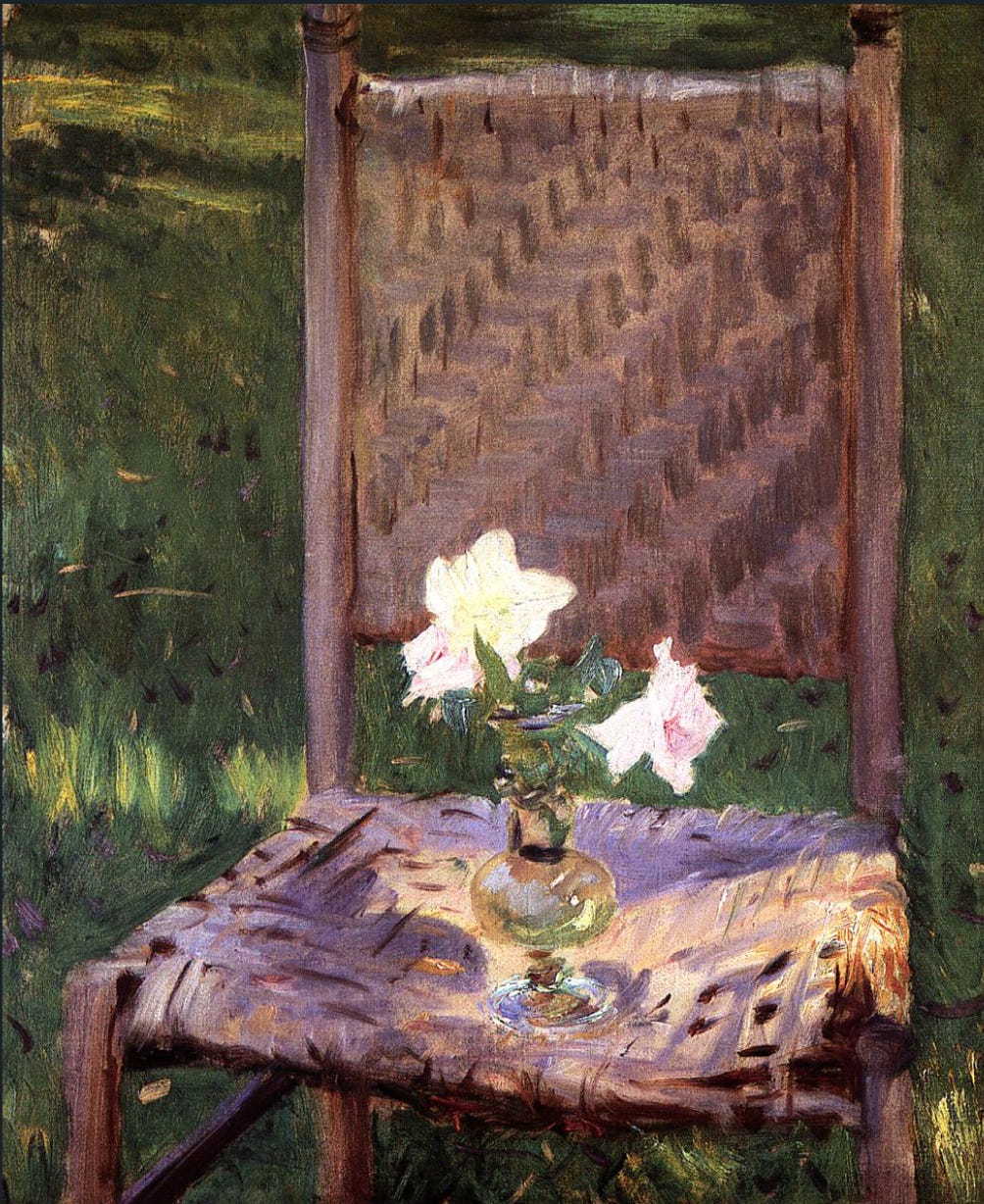
When I think about outdoor furniture a couple of pieces come to mind. A simple well-worn plank chair, something that supports an impulse to gaze out at the world and daydream. A little wrought iron bench tucked into a garden corner, perfect for a quiet morning coffee. A cozy rattan nest, warm and social, something to curl up in with good company nearby. The best patio set is one built over time, with well worn pieces that fold themselves into our gardens and back porches. Pieces with history, beautiful design and materials that last, or at least age gracefully. Let me call out a few.
Sometimes a chair finds you when you’re so stupefied by the view you need something to fall back into. This is not a chair you curl up in and travel inward, it’s the kind of seat that sits you upright, opens your lungs and encourages you to look outward. This is a gazing chair. This is the Adirondack.
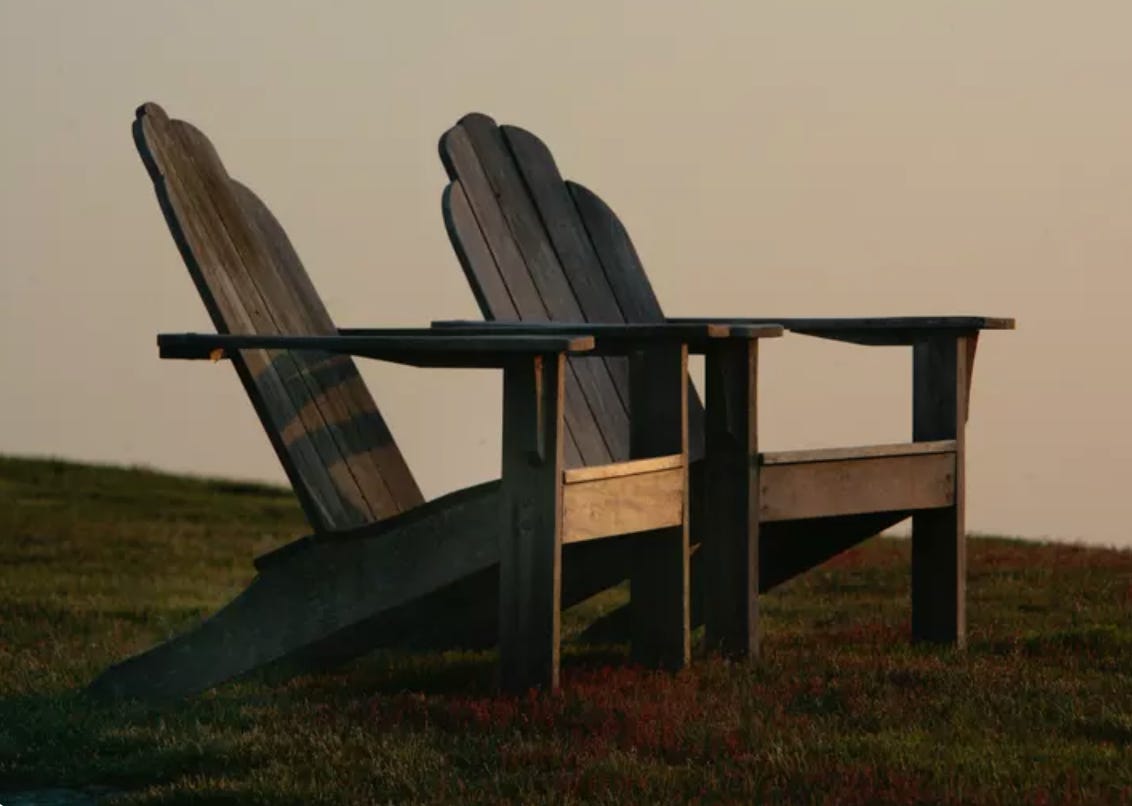
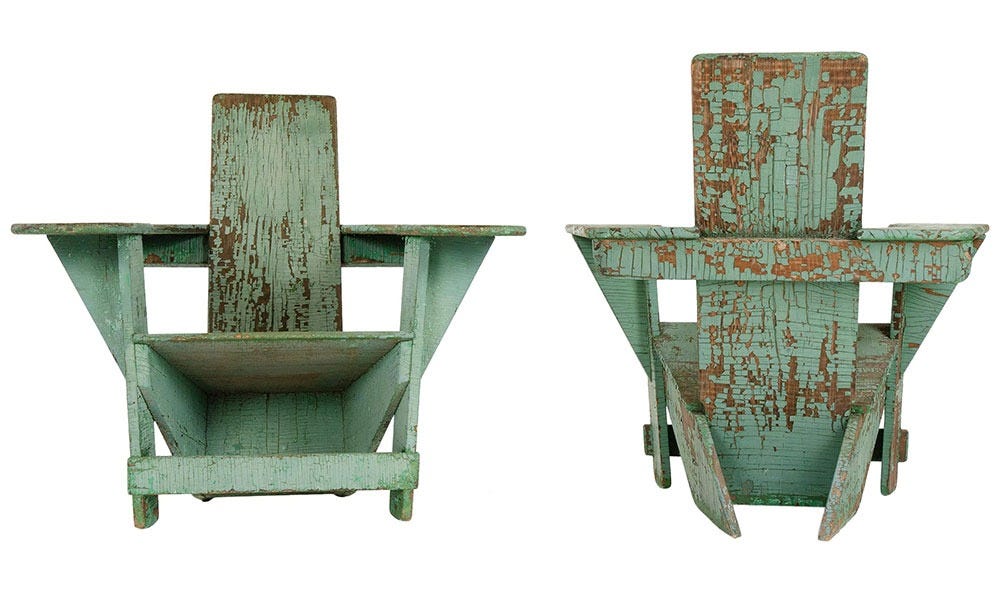
Or as it was originally known by its first inventor Thomas Lee, the Westport Chair. The Adirondack features wide armrests that hold your relaxed limbs at chest level, a deep seat that angles sharply back, and a strong flat vertical back. I prefer Lee’s original Westport design: a single stout plank, completely unpretentious, the kind of support to hold your back straight and upright while you take in your surroundings. Later versions, like the one patented by Irving Wolpin in 1938, featured the multi-slat back that fans at the top. Upright support, comfort at attention. An open chest for deep breaths and long surveying.
Upright support, comfort at attention. An open chest for deep breaths and long surveying.
Thomas Lee designed the first version in 1903 for his friends and family, intended as a lounge chair suitable for the slopes of his home near the Adirondack Mountains in upstate New York. The American taste for the sturdy design and iconic profile were set early, and Adirondacks became synonymous with the beautiful views of North America they came to scatter. I like finding one at the top of a view, maybe overlooking the garden or the pool. If you’re feeling handy, the original Westport design is simple enough to build yourself. Lee made the first one for his own backyard.
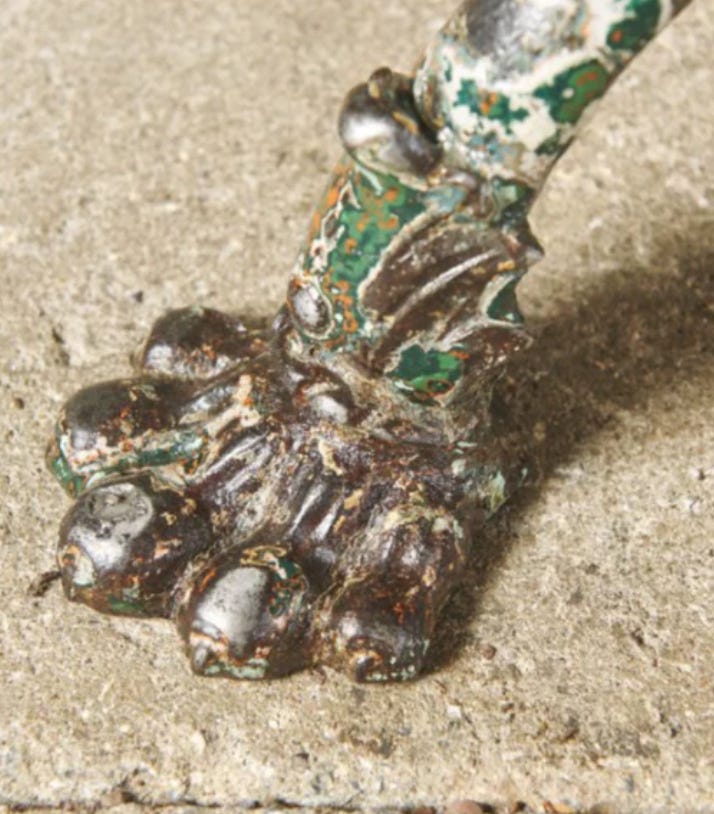
Imagine winding your way through an overgrown garden. The vines and flowers drape themselves over walls and gates, cluttering the path so you have to turn sideways to push through. You find a little iron chair and side table, just big enough to hold a glass, tucked into a quiet corner. Its wrought iron bends are handmade, riveted together at the seams. Lion claw feet sink into the soft moss covering the pavers.
Lion claw feet sink into the soft moss covering the pavers.
Layers of paint flake off its surface, showing the age and care this little metal throne has had. This delicate, sturdy marvel of French design is the Arras Garden chair, and it’s the perfect way to make a sanctuary in a crowded landscape.
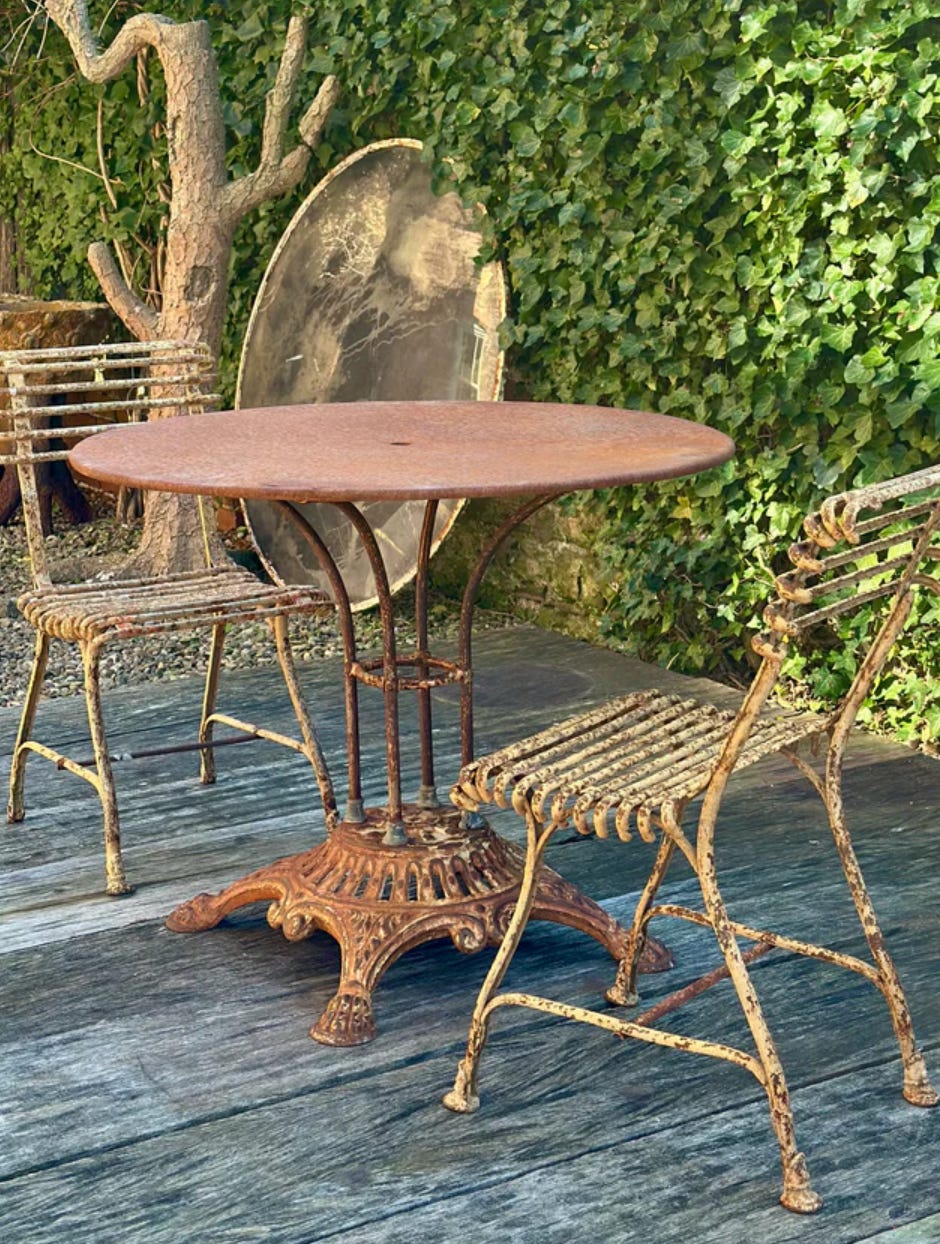
The style emerged in the mid 1800s when a metal manufacturing company in Arras, France, Grassin-Baledans, began to specialize in outdoor furniture. The chairs, tables and benches are not welded but rather made from hand-rolled and forged iron with cast decorative elements, riveted together with complex curves that still manage a clean modern edge. That cleanliness is what would make them at home accenting a minimalist patio or a modernist garden, and the fact that they are still manufactured today is a testament to that design.
Even if it’s not the famous Arras chair itself, consider the curves, durability and character of cast iron in your backyard. These pieces are easy to find in secondhand markets and estate sales. Don’t worry about peeling paint and a little rust, these robust pieces will outlast you and me, and all that texture adds to the allure of a little secret corner of your yard. I like to tuck a decorative iron chair away in my garden to watch the carpenter bees in the morning or the clematis slowly climb the back trellis.
Our last stop is a place with friends. Forget the vistas and the little hideaways — where we want to be now is on our back porch with family nearby, talking about movies, sipping cocktails and spreading gossip. For that we need something woven with warmth. A chair that earns its character through material and making. The Kenmochi Rattan Lounge gets all of this.
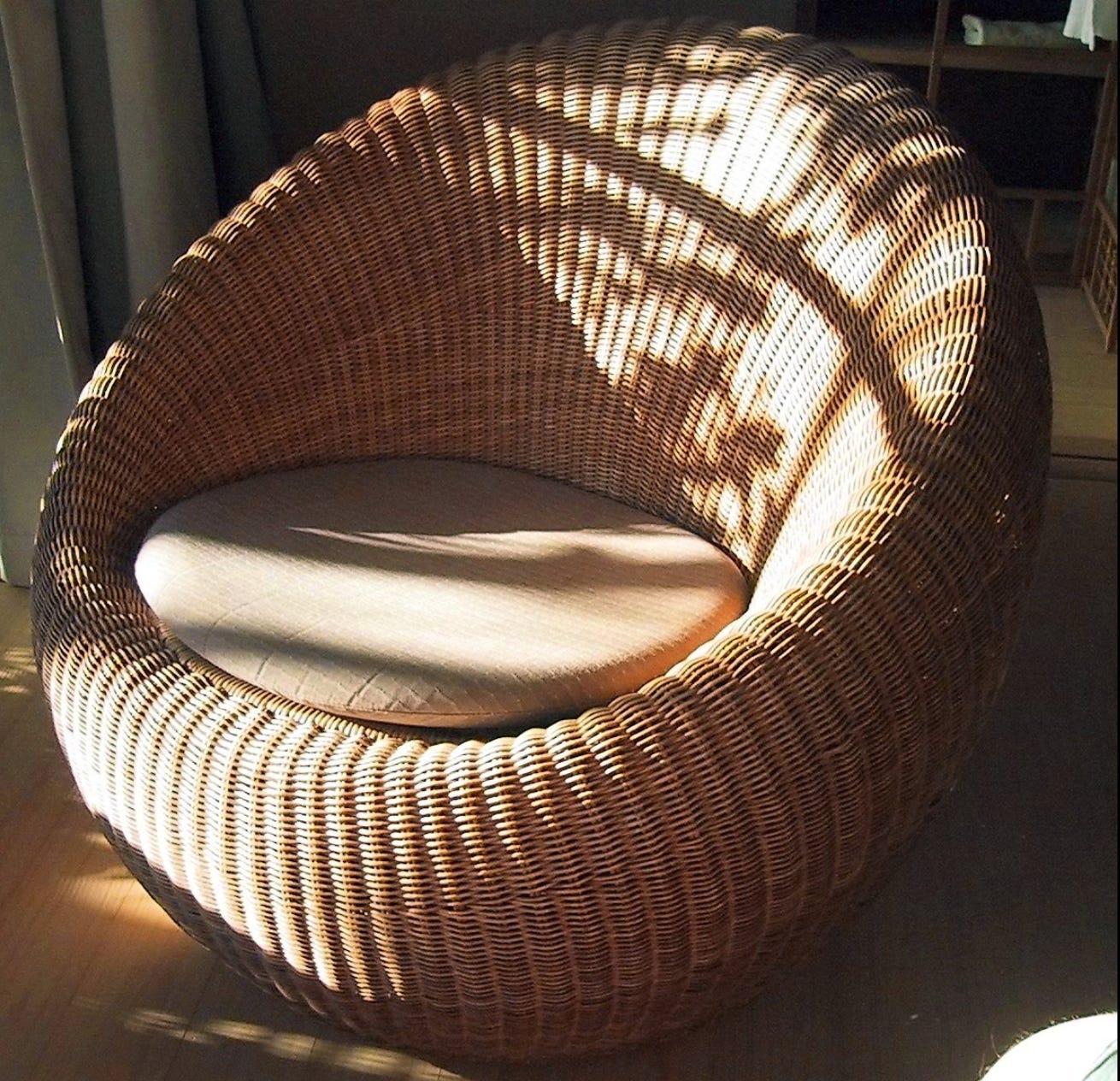
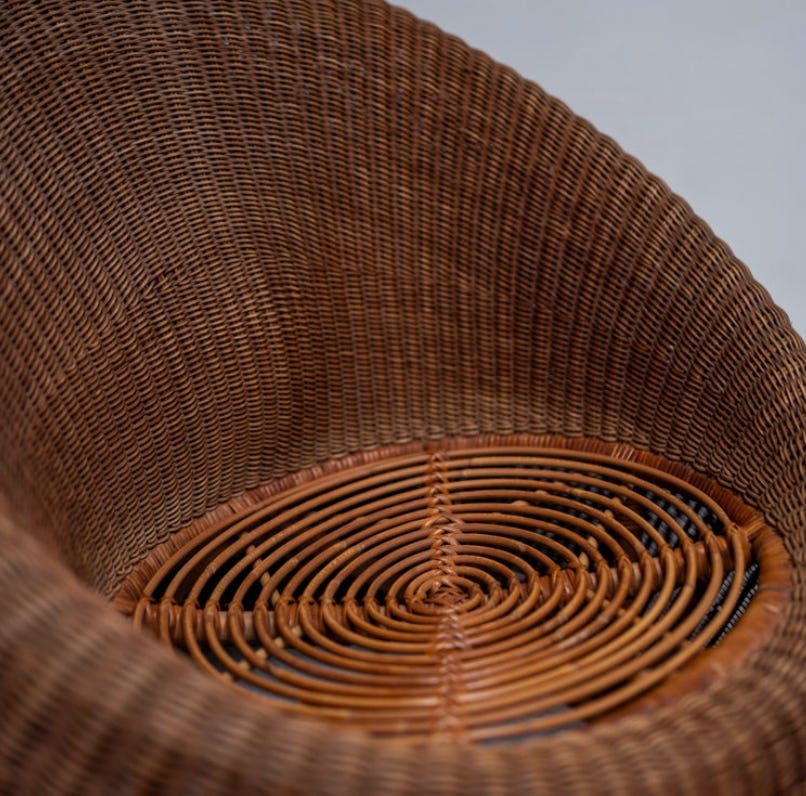
In 1958 Isamu Kenmochi designed the Rattan Lounge alongside his friend and colleague, sculptor Isamu Noguchi. Commissioned by the Yamakawa Rattan company, they decided on a laborious weave of three different rattan types, creating a beautiful cloth-like effect. Rattan, in Japan at the time, was viewed as a cheap and temporary outdoor material, prone to bleaching, fading and wear. Kenmochi embraced this ephemerality, and by infusing luscious textures and simple modernist curves elevated the traditional outdoor craft to contemporary mastery. In 1964 it won the prestigious Japanese G-Mark Prize and the design was acquired by MoMA.
It’s the choice of material and texture that draws me to this chair. Armrests and top surfaces will burnish and darken, the side facing the evening sun will bleach and dry, the edges will start to fray. That kind of wear is what Kenmochi was after, and it’s what makes rattan so right for a back porch full of friends — the chair loosens up as the summer does. The creak and groan under our weight is a welcome sound of afternoon relaxation.
Let the texture create connection between disparate pieces and don’t fret over the fraying edges; they are there by design.
Feel confident getting a few different woven pieces, they don’t have to match. Let the texture create connection between disparate pieces and don’t fret over the fraying edges; they are there by design.
Well, dear reader, the rain has stopped, and although it’s too late and too cloudy for me to do much sitting around outside I should probably take the dog for a walk, so I will leave you here. I hope you found a little inspiration to make your backyard, garden or patio a great place to sit and think, watch the flowers, or have a drink with friends.
As I’ve been reading and writing about chairs this afternoon I’ve been reminded of how the philosopher Gaston Bachelard, in his book The Poetics of Space, talked about the intimate pieces of furniture and objects we fill our homes with and how they become little shelters for our imagination. I like the idea that we aren’t just picking somewhere to sit but finding a little story to tell our guests and ourselves every time we take a load off.
‘Till next time.
A note on whereabouts
Whereabouts hosts monthly events to create community and culture.
Whereabouts gatherings, in the rooms where the work happens.
Each gathering takes a discipline as its premise — quantum and art, a ceramicist’s studio, a working lab — and the room is curated person by person. We invite operators, makers, and thinkers chosen for what they pay attention to, and the work they bring with them.
Be in the room — or set it.
Join the list for future gatherings.
whereabouts.us
 | A guest post by
|