

An ode to bubbles
Fizz, pop, clink, who doesn’t love bubbles? They signal fun and celebration and it's kind of hard to be sad for too long while drinking them.

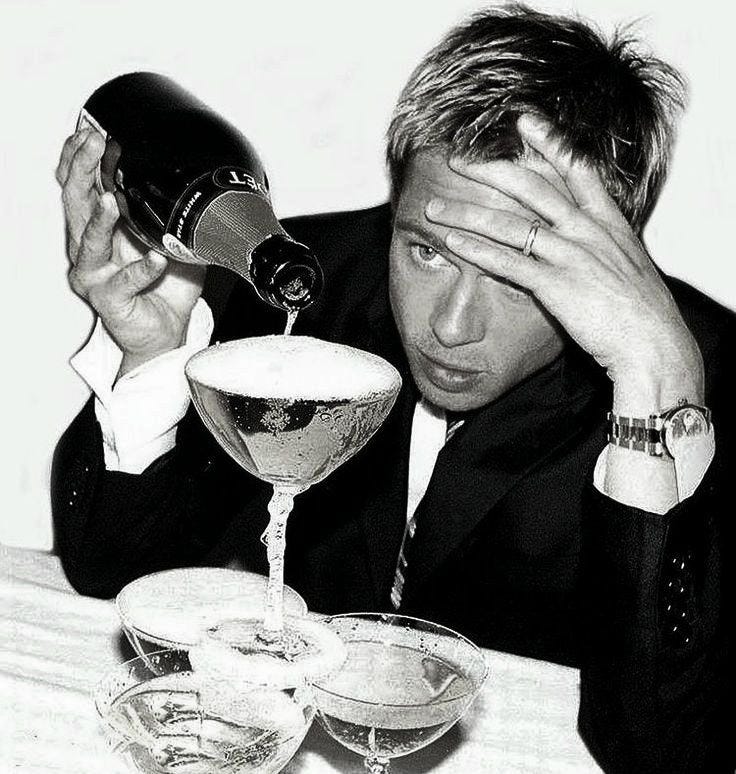
This is a kiddie pool level dive into the history of bubbles, but more importantly an evaluation and praise of why we should all drink more of them. It recently came to my attention via the purveyor of most cultural slop, my instagram feed, that everyone’s become fixated on the histories of various foods/condiments. Salt, a world history has gone viral and as a result, is encouraging us all to read niche non-fiction that takes us down even nicher areas of knowledge. The history of butter is coming in hot next, I presume.
I personally commend this, if anything, it’ll turn you into a dinner party guest with unique, yet factual, bits of dialogue.
But back to our chosen beverage of choice, be it champagne, pét nat, cava, spumante, or an american sparkling wine. Most of us are well aware of the “veuve” champagne houses of France which have their own admirable history. One that bypassed the 19th century Napoleonic code, through a loophole allowing widows, Barbe-Nicole Clicquot-Ponsardin, Louise Pommery and Lily Bollinger, among other women to turn vineyards into branded empires, all at a time when women legally couldn’t own property let alone a business. Barbe-Nicole took over her late husband’s failing business at 27 and, legend has it, invented the riddling process at her own kitchen table, drilling holes into it at an angle to test how sediment settled in an upturned bottle, years before anyone in the business took her seriously.
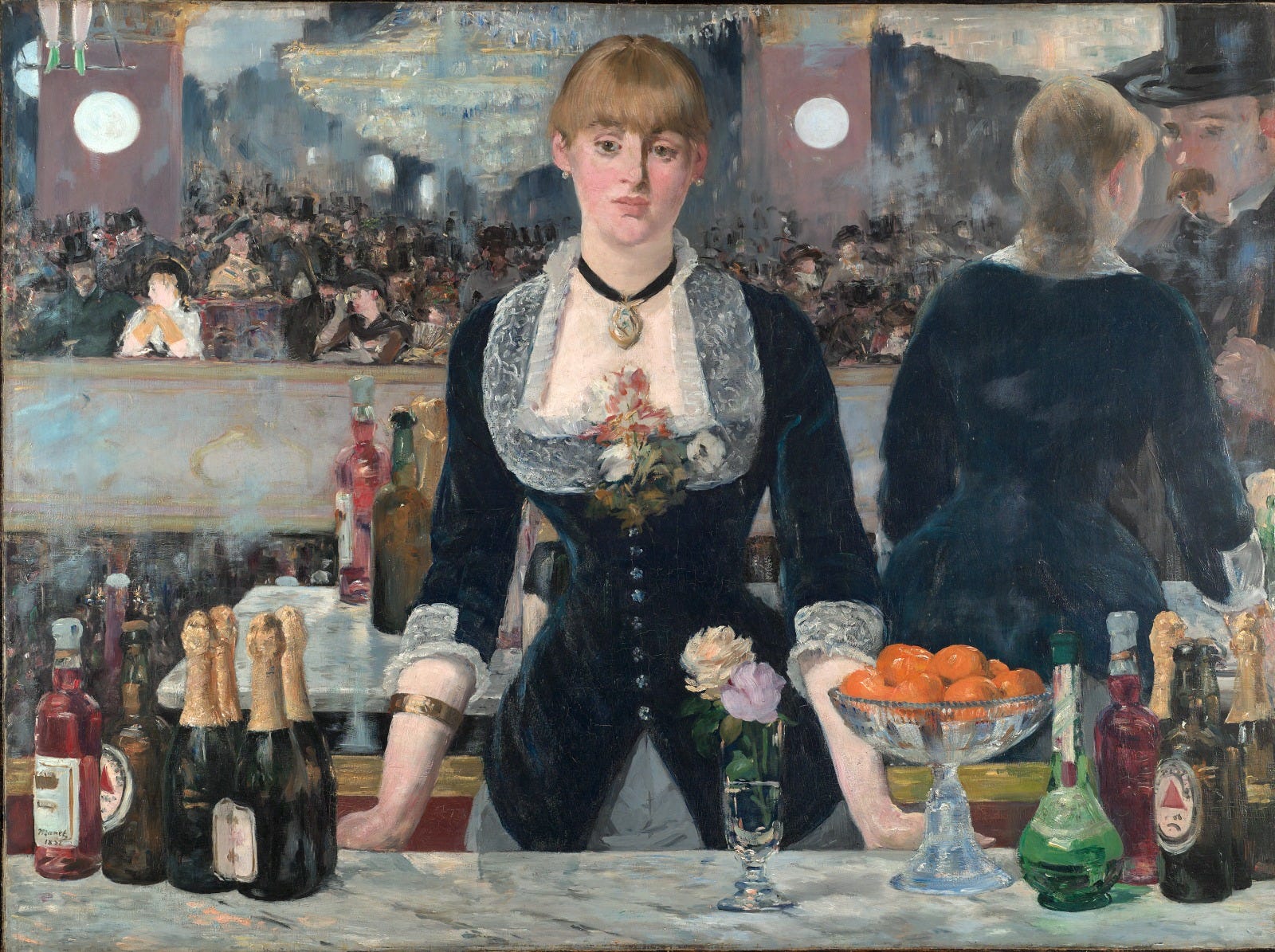
Once champagne left the court and entered the café, it became a subject painters couldn’t resist. Manet’s A Bar at the Folies-Bergère places champagne bottles at the very center of the canvas, next to a barmaid whose expression gives nothing away. The painting is often read as a meditation on distance and performance, on the gap between what a room presents and what a person feels while working it. That tension between spectacle and interiority is, not coincidentally, the exact tension every good host learns to hold.
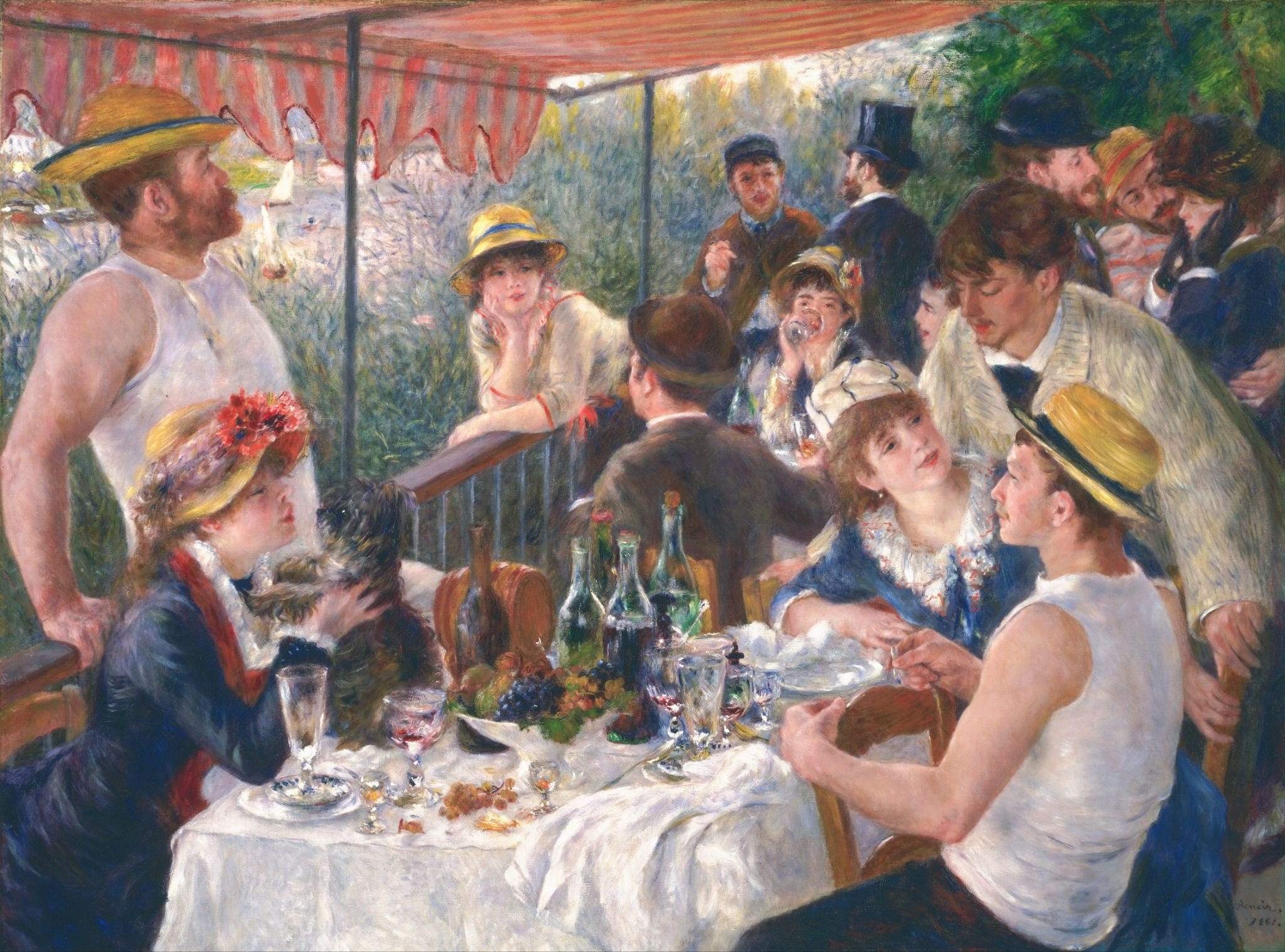
Renoir’s Luncheon of the Boating Party is soaked in it too. Glasses catch the light differently than the wine or the fruit. Impressionism was, among other things, obsessed with how light behaves on a surface that is moving, and few surfaces move like the inside of a glass of champagne. The Impressionists were not just painting parties. They were painting the specific, brief, slightly chaotic joy of a gathering that everyone present knew would not last.
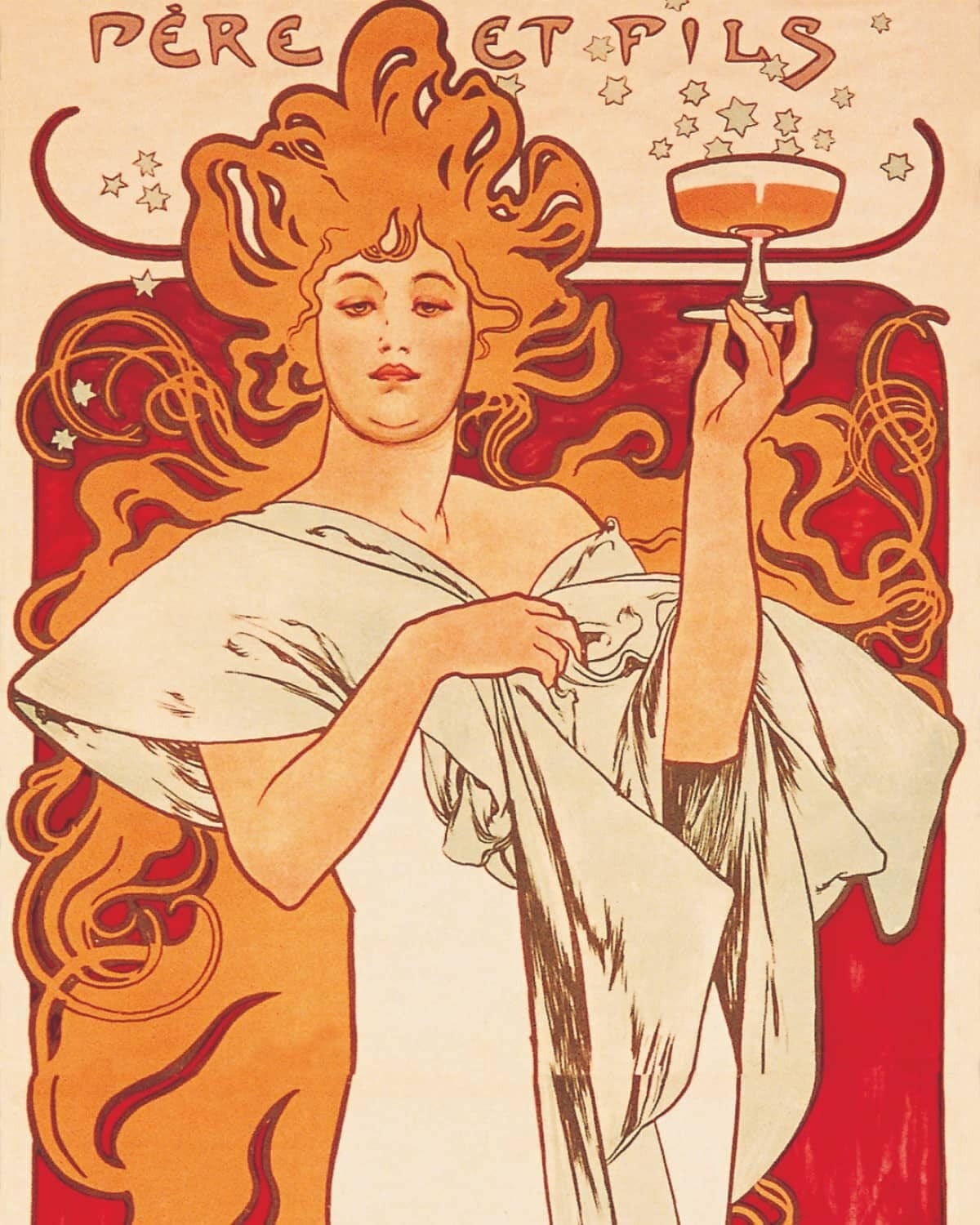
Champagne houses understood the value of an image early. Ruinart commissioned Alphonse Mucha to design its posters at the turn of the 20th century, folding Art Nouveau’s long-limbed women and gold linework directly into the brand. It was one of the first instances of a luxury house treating an artist’s hand as inseparable from the product itself. The label became a small gallery. The collaboration between champagne houses and artists lives on strong to this day.
“I only drink Champagne on two occasions, when I am in love and when I am not.”
- Coco Chanel
Champagne and beyond
Champagne is the myth, but it doesn’t have a monopoly on bubbles, and the differences are worth knowing if you are the one filling the glasses.
Cava has its own quieter history, rooted in Catalonia in the 1870s, when local producers began using the same traditional method as Champagne but working with native grapes like Macabeo and Xarel·lo. It never asked for the same reverence, and that is part of its appeal. It is a wine made for a table, not a coronation.
Prosecco takes a different road entirely. Made mostly in a single large-tank fermentation rather than in the bottle, it trades complexity for immediacy. It is meant to be young, bright, and unbothered by ceremony, which is its own kind of honesty.
Franciacorta, from Lombardy, is the quiet outlier. It follows the traditional method, ages slowly, and rarely announces itself the way its French counterpart does. Among people who host seriously, it has become something of a tell. Pouring it says you know something the room might not.
Pét-Nat is the ancestral method, captured mid-breath. Bottled while the initial fermentation is still very much alive. Without the intervention of extra sugars or cultured yeasts, the carbon dioxide remains trapped in its rawest state. The yeast sediment, or lees, often lingers in the bottle, unrefined and undisgorged, lending a cloudy, unbothered character to the final pour.
Knowing the history is one thing. Knowing who you’re actually inviting to the table is another. If a bottle had a personality, and at a certain point in the evening every bottle does, here’s who’s showing up.
Personality by bubbles
Champagne is the older sibling who RSVPs first and somehow makes the party feel official just by walking in.
Cava is the friend who brings a full tray, does the dishes, and never mentions it.
Prosecco says yes to a Tuesday with twenty minutes’ notice and makes it feel like the best plan going.
Franciacorta knows the restaurant nobody’s heard of and only tells you if you ask right.
Pét-Nat shows up unannounced, hair a mess, wearing something you couldn’t replicate, and somehow the party wasn’t a party until they walked in.
None of this is really about wine. It’s about hosting often, celebrating the little things and sharing sips.
A still wine can be poured quietly, almost as an afterthought. A sparkling wine not so much. The cork announces itself. The pour has a sound. The first sip demands a small pause, whether anyone means it to or not. Every gathering that opens with a glass of something sparkling is borrowing three centuries of accumulated theater. The devil’s wine that nobody could stop from misbehaving. The court that turned an accident into an aesthetic. The painters who could not stop looking at what light does inside the glass.
To host well is to understand that a room needs a beginning it can feel in its body, not just register in its mind. Bubbles have been doing that job for longer than almost anything else on a table. They are still doing it at openings this season, whether the show is hung in Lagos or Lombardy or a living room three blocks from here.
Pour accordingly.
P.S. — Looking to skip the alcohol but not the ceremony? There are some excellent NA champagnes on the market now, all the pomp and circumstance without the buzz. Ask Zena in the app for all the best recommendations.
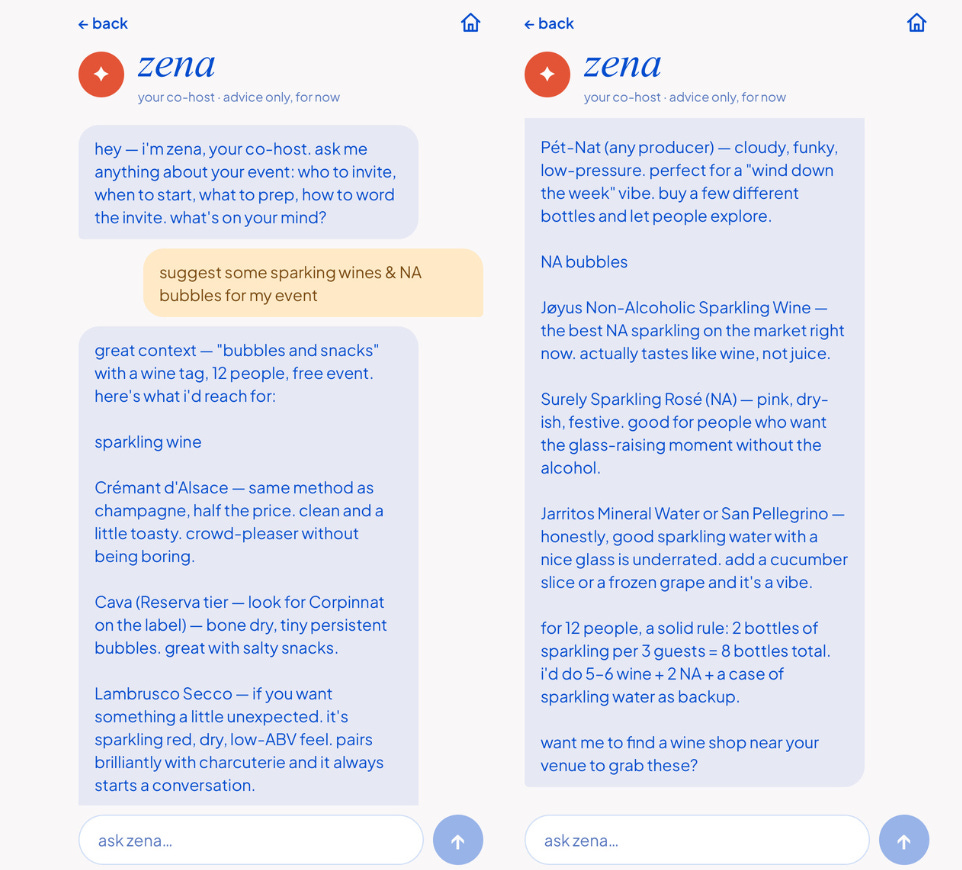
So, download the whereabouts app, send some invites and get the next festivity on the books.

Whereabouts hosts monthly events to create community and culture.
Whereabouts gatherings, in the rooms where the work happens.
Each gathering takes a discipline as its premise — quantum and art, a ceramicist’s studio, a working lab — and the room is curated person by person. We invite operators, makers, and thinkers chosen for what they pay attention to, and the work they bring with them.
Be in the room — or set it.
highly recommend "Bubbles" by Peter Sloterdijk